
AI video vs traditional production: an honest comparison for small brands
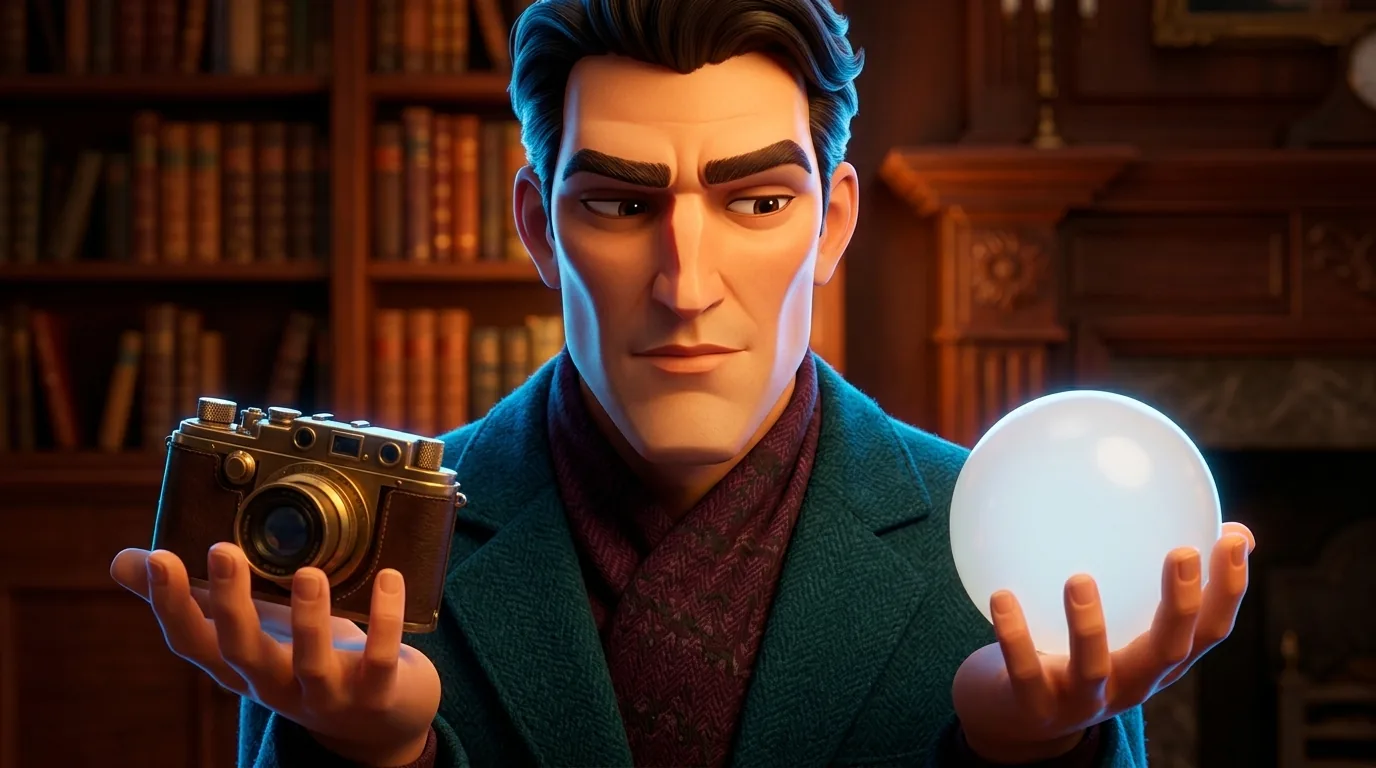
AI wins on cost, speed, impossible shots and recurring characters; a traditional shoot still wins on exact product fidelity, real people, and precise reshoots — the right choice depends on which of those you actually need.
Why does a traditional shoot cost so much?
You're not paying for the final video; you're paying for a day. A shoot means a crew, a location, gear, a director, and everyone's time whether the camera rolls or not. That's why the quote made you flinch — a four-figure number can be entirely reasonable and still be more than a small brand wants to spend on one clip.
None of that means the shoot is overpriced. It means the shoot is expensive by nature, and the question isn't whether it's worth it in the abstract — it's whether your particular video needs the things only a shoot provides.
Where does AI video genuinely win?
Four places, and they're real, not marketing. Cost: there's no crew or shoot day, so the number is a fraction of a production. Turnaround: days, not weeks, because nothing has to be scheduled. Impossible shots: a talking mascot, a flight through your product, a whole imagined world — things a camera physically can't get, or can only get with a big VFX budget. And recurring characters: once a character exists, using it again is cheap, so a series gets more affordable, not less.
If what you want is a distinctive, imaginative clip for social — and you don't need to film a real place or a real person — this is where AI is not just cheaper but genuinely better suited.
- Cost — a fraction of a shoot, because there's no shoot.
- Speed — days, not weeks; nothing to schedule.
- Impossible shots — mascots, flythroughs, imagined worlds a camera can't capture.
- Recurring characters — build once, reuse cheaply across a whole series.
Where does traditional production still win?
Three places, and we'll be straight about them because pretending otherwise wastes your money. Exact product fidelity: if every stitch, label and reflection on your physical product has to be perfect and unmistakably yours, a camera pointed at the real thing is still the surest way to get it. Real people: your actual staff, your actual founder, a real customer's face — a shoot captures a real person being themselves in a way that's hard to fake convincingly.
And precise reshoots: on a set, if one detail is wrong you can adjust and shoot it again exactly. Regenerating a shot is more of a negotiation with the tool than a dial you turn. If your project lives or dies on frame-perfect control of a real object, the shoot earns its cost.
- Exact product fidelity — the real thing on camera beats a render of it.
- Real people — a genuine face and voice, captured, not approximated.
- Precise reshoots — change one detail and re-capture it exactly.
How do I choose without regretting it?
Ask what the video absolutely has to have. If the answer is a real person or a photographically exact product, lean toward the shoot and budget for it honestly. If the answer is a distinctive idea, a character, or an impossible shot for social, AI does it for a fraction of the cost and time.
A lot of brands land in the middle, and that's fine: use AI for the frequent, imaginative social clips where speed and character matter, and book a shoot for the once-a-year hero piece where a real face or exact product is the whole point. It was never a war between the two — they're tools for different jobs.
Can I start with AI and shoot later?
Usually yes, and it's often the smart order. An AI video is cheap enough to test an idea, a character, or a message before you commit real money to a shoot. If the AI version proves the concept travels, you've de-risked the expensive one — you now know the idea works before you book a crew.
Starting cheap and specific also tells you what your audience responds to, which is exactly the knowledge that makes a later shoot worth its price. The mistake is assuming you must pick a side forever. You can let the cheap tool teach you what the expensive one should do.
Common questions
Is AI video cheaper than hiring a production crew?
Considerably — there's no crew, location or shoot day, so it's a fraction of a traditional quote and turns around in days. The trade-off is less frame-perfect control over real people and exact physical products.
When should I still pay for a traditional shoot?
When the video must feature a real person, capture your physical product with exact fidelity, or allow precise reshoots of a real object. Those are the jobs a camera on set still does best.
Can AI video match the quality of a real production?
For imaginative, character-driven, social-first clips it can look every bit as polished. For a photographic record of a real face or product, a shoot is still more faithful. It depends on what 'quality' means for your video.
Should I test with AI before committing to a shoot?
Often, yes. An AI clip is cheap enough to prove an idea travels before you book a crew. If it works, you've de-risked the expensive version; if it doesn't, you've saved the shoot budget.