
Should your founder be the face, or should you build a mascot?
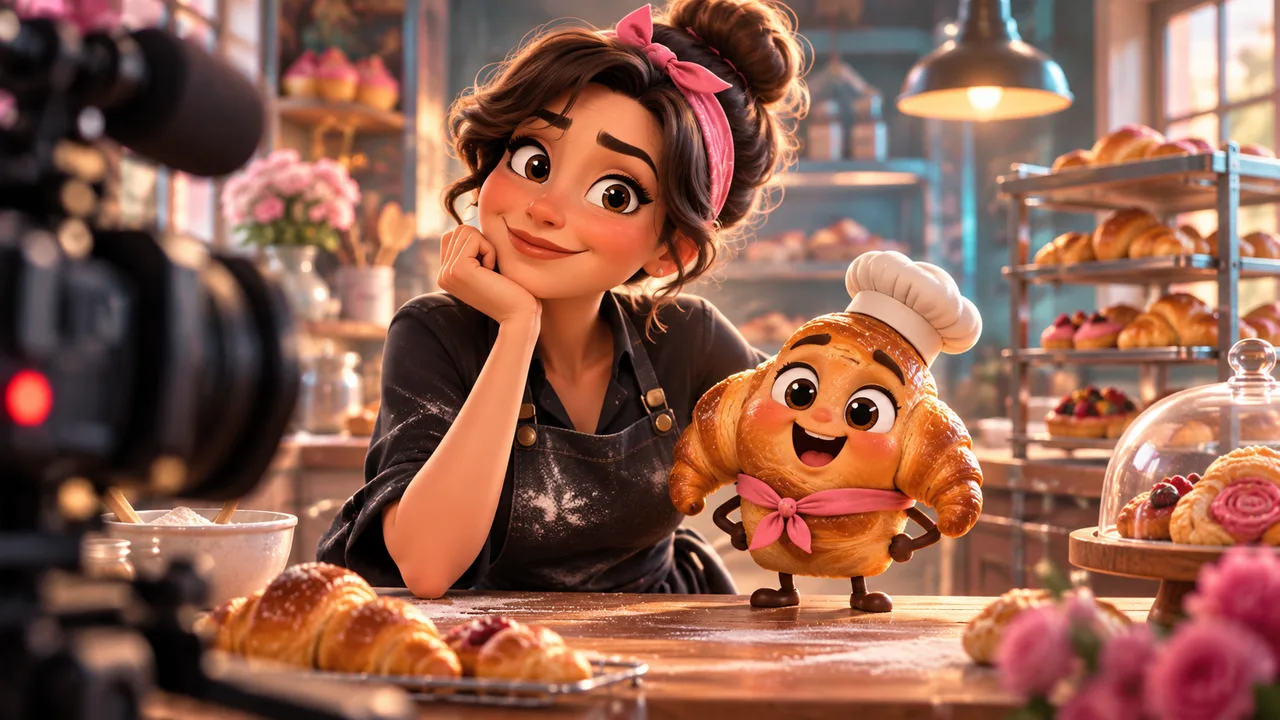
If people are buying you — a doctor, a consultant, a chef — put your founder on camera. If you're building something that should outlast you, build a mascot instead.
What does putting the founder on camera actually buy you?
Trust, fast. A real person talking to camera reads as honest in a way that takes a mascot months to earn. If you're a dentist, a chiropractor, a lawyer, a consultant, or anyone whose business is really 'hire this specific person', the founder on camera IS the product. Viewers aren't buying a brand, they're buying a relationship with you.
It also works because it's cheap to start. You don't need to design a character, name it, or figure out what it looks like from three angles. You just need your founder and a camera, or in our case, a good likeness reference and a script.
What's the catch with a founder-led brand?
Three things bite you later. First, every video needs your founder — new location, new offer, new season, same person has to show up again. That's fine at one location. It gets expensive and awkward at ten.
Second, it doesn't transfer. If the founder sells the business, steps back, or the brand wants to expand past what one person can front, the whole video identity has to be rebuilt from zero. Third, it ages and it varies — hairstyles change, weight changes, lighting on the day changes, and every new video has to match the old ones or the brand looks inconsistent.
- Best fit: solo practitioners, consultants, real estate agents, clinics where the provider is the sell
- Weak fit: franchises, product brands, multi-location businesses, anything meant to outlast its founder
What does a mascot actually buy you?
Reusability. Once a character is built and locked — same proportions, same colors, same face — it can appear in fifty videos, twenty locations, and five years of content without ever needing to be 're-filmed'. Nobody has to show up. Nobody ages. Nobody quits. We've written before about how we keep an AI character's face and proportions locked across videos — that's the exact machinery that makes a mascot durable.
It also scales sideways in a way a person can't: license it, put it on packaging, hand it to a franchisee in another city, and it's still 'on brand' because it was never tied to one person's actual face.
So what's the catch with a mascot?
It starts from zero recognition. A founder walks in with a face people already half-trust because it's a real human being. A mascot is a stranger until you've shown it enough times that people recognize it — that's five, ten, twenty videos before it's doing any of the trust-building work a founder does on video one.
It also costs a little more up front, because there's design work: what does this character look like, what's its personality, does it fit a clinic or a bakery or a car wash. That's a real cost, but it's a one-time cost — not one you pay again every time you need new footage.
Can a brand use both?
Yes, and a lot of the small brands that do this well split the job. The founder appears in the 'why we exist' video, the launch announcement, the personal story — the moments where being a real human matters. The mascot carries the recurring weekly or monthly content: the offers, the reminders, the seasonal posts, the stuff that needs to go out constantly without pulling the founder away from running the business.
That split also hedges the risk. If the founder ever leaves or the business changes hands, the mascot — and everything built around it — keeps working.
How do you actually decide?
Ask one question: are people buying you, or are they buying the business? If the answer is you, put yourself on camera and don't overthink it — a mascot would just be a stranger standing between you and the trust you already have. If the answer is the business, and you want it to run without you standing in every video for the next ten years, build the character instead.
Common questions
Can we start with a founder and switch to a mascot later?
Yes, plenty of brands do — the founder builds early trust, then a mascot takes over recurring content once the brand has its own identity.
Does a mascot have to be an animal or cartoon character?
No. It can be a stylized human character too — the only requirement is that it's consistent and isn't tied to one real person's actual likeness.
What if our founder doesn't want to be on camera?
Then build a mascot. Forcing a reluctant founder on camera usually reads as awkward, and awkward undercuts the trust you were trying to buy in the first place.
Is a mascot cheaper long-term than reshooting a founder?
Usually yes — the character design is a one-time cost, while a founder-led brand pays a founder's time for every single new video.